

Every Sunday,streets, walkways, and pathways in Central, Admiralty, Causeway Bay, and various parks and beaches around Hong Kong are transformed into little bustling places of refuge for the almost 400,000 migrant domestic workers (MDWs) in the city.
After working in their employers’ homes throughout the week, where their sleeping quarters are often cramped or shared, they create a space for themselves where they can relax, wind down, and connect with friends.
A microcosm of the mostly Indonesian and Filipino MDW community in general, these groups are formed based on friendships, interests, religion, politics, hobbies, home town or dialect – just some of the numerous points of connection throughout these vibrant communities.
Amongst the hundreds of active community groups, each with their own mission and vision statements, the common goal is for the betterment of migrant lives and the MDW population here in Hong Kong. These groups often organise beach and trail clean-ups, volunteer for various NGOs, and spearhead donation drives for those in need.
Unbeknownst to outside observers, these groups have their own tight-knit communities, and obey an unspoken rule about who can set up and where. In the most populous areas, it is understood that one cannot just lay down their picnic mats, cardboard, or tents in any random spot, as this may already be ‘reserved’ for a group that has been using it for many years prior. Any disagreements are soon settled either on a ‘first come, first reserved’ basis or if said group demonstrates a valid historical claim to use of the space.
Over time, some of these areas even earn their own nicknames within the MDW community; for example, Filipinos call Li Yuen Street East and West in Central ‘ale-ale’ – a colloquial Filipino term of the English word ‘alley’ – while the Indonesians call the Mong Kok footbridge ‘Jembatan Seribu Bidadari’, which means ‘Bridge of a Thousand Angels’.
For almost fifty years, migrant workers from the Philippines have made the financial district along Chater Road their de facto sanctuary, where they connect with others, pack balikbayan boxes to send to the Philippines, learn new skills, eat their favourite food, run errands centred around World Wide House, and celebrate a variety of events and special occasions.
One of the largest events in the Filipino MDW calendar is the Philippine Independence Day celebration in June, an annual event hosted by the Philippine Consulate General in Hong Kong that most commonly takes place in Chater Road. The event draws thousands of MDWs from across the city to watch live song and dance performances, take part in competitions, and even meet celebrities brought over from the Philippines by various sponsors.
I always encourage everyone to do positive things while working overseas
Mao, an Indonesian MDW who owns a social media blog called Hiking Hongkong
Indonesian MDWs tend to congregate more at Victoria Park in Causeway Bay, Kowloon Park in Tsim Sha Tsui, and the public footbridges around Mong Kok.
“Most Indonesians spend their holidays in the park, and there are many of us in Hong Kong who do different activities, such as aerobics and yoga, traditional Indonesian dancing, painting, make-up classes, culinary arts, and of course, hiking and spending time with nature,” says Mao, an Indonesian MDW who runs a social media blog called Hiking Hongkong. “I always encourage everyone to do positive things while working overseas,” she says with a smile.
Sometimes looked upon with curiosity and bemusement by passers-by, these lively get-togethers on the streets and public thoroughfares celebrate everything from birthdays, group anniversaries, graduations, and reunions. They have a society all of their own, knowing where to get a massage, where to buy the food they crave from their home country, learn a new craft, or even have their hair cut or get nails done.
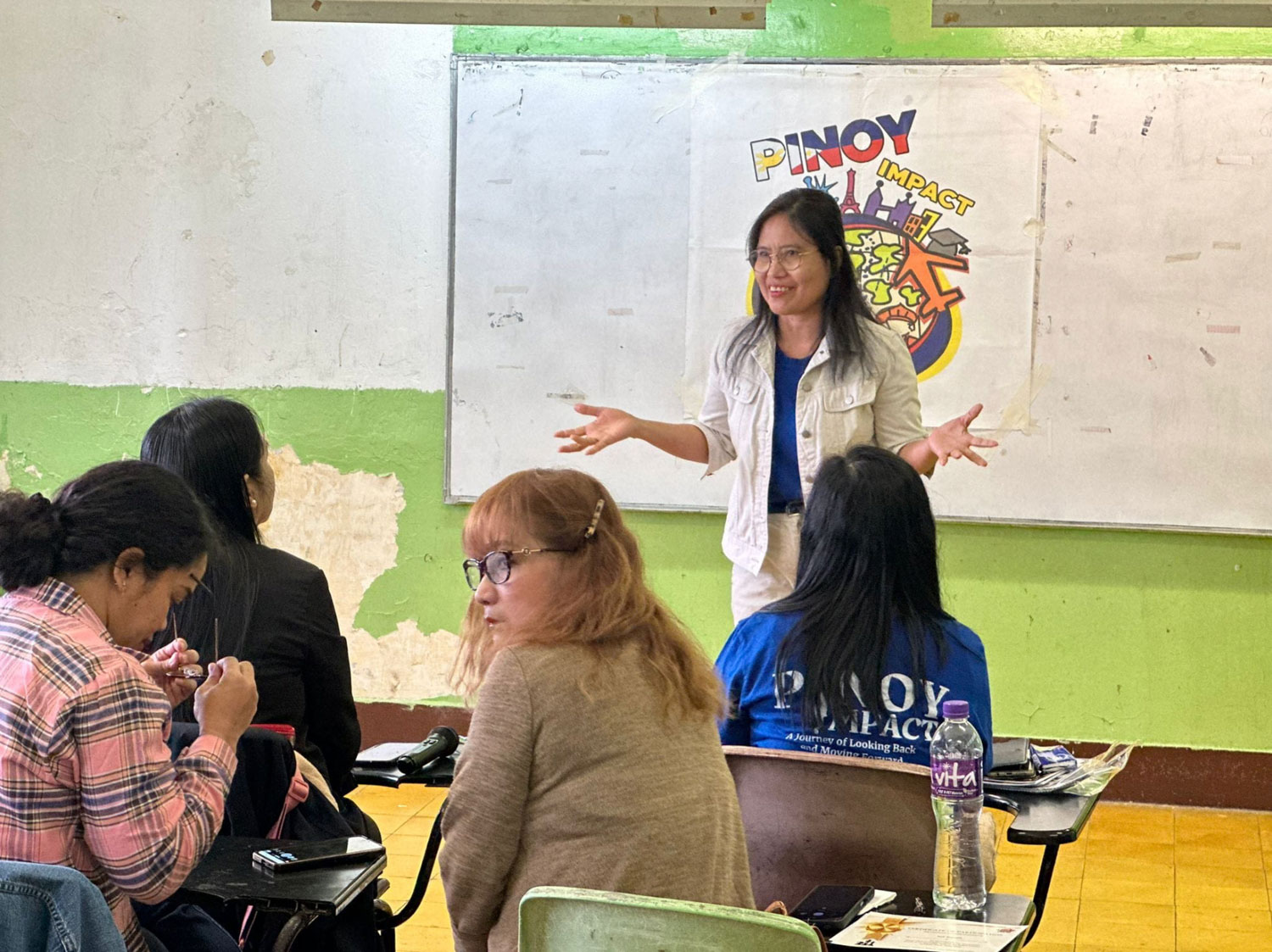
“Minsan ang training namin ay sa footbridge sa Admiralty, at kung may mga events naman sa Chater Road, minsan may booth din kami doon para magbigay ng massage services from our students,” [Sometimes we do our training by the footbridge in Admiralty, and when there are events along Chater Road, we sometimes get offered a booth where we can showcase massage services from our students] shares Ofelia Baquiran, President of United Migrants Entrepreneurship and Livelihood Association (UMELA), a community group who offer massage therapy courses to MDWs. [Check out our UMELA feature on page 6]
On 16th March this year, the National Council of Solo Parents (NCSP) held their 2nd anniversary under the flyover near the Performing Arts Centre in Admiralty. The event was attended by Philippine Consulate Vice Consul George Soriano, General Secretary of the NCSP from Manila, Redd De Guzman, and many prominent leaders from the Filipino community. They held a beauty pageant, Search for Ms. Solo Parent, where six participants had to change wardrobes, retouch their makeup, and present themselves in front of the judges.


“Para mareserve iyong space para sa event namin, may isang officer kami na pupunta sa venue ng 6:00am. Tulong-tulong naman na kaming lahat magdecorate,” [In order to reserve the space for our event, one of our officers went to the venue at 6:00am. Then we all helped with the decorations] says Marie Rivera, President and Founder of NCSP.
“Ang normal na meeting place namin tuwing Sunday ay sa Central Post Office, pero ngayon may Overseas Worker’s Welfare Administration (OWWA) Global Centre na, sana doon na naming gaganapin ang mga livelihood workshops at meetings,” [Our normal meeting place every Sunday is outside of the Central Post Office, but now that the OWWA Global Centre is open, we hope we can hold our livelihood workshops and meetings there in the future] says Marie.
The OWWA Global Centre had its grand opening ceremony in April of this year. It is the Philippine government’s answer to what many Filipino community leaders have been asking for these past decades: a sheltered place for migrants. Once fully operational, the centre will include workshop rooms, a medical clinic, a counselling section, games area, a gym, and even napping quarters. The renovation, which is currently underway, will also feature a sizeable multi-purpose hall. The total capacity, including all the amenities, will be 1,780 people.
A prominent part of the premises is Migrant’s Brew, a spacious, comfortable café lounge where Filipinos can drop by for free coffee and biscuits. It is a welcoming space where people can relax and chat with friends, read a book, work on their laptops, or just take some time out for themselves.
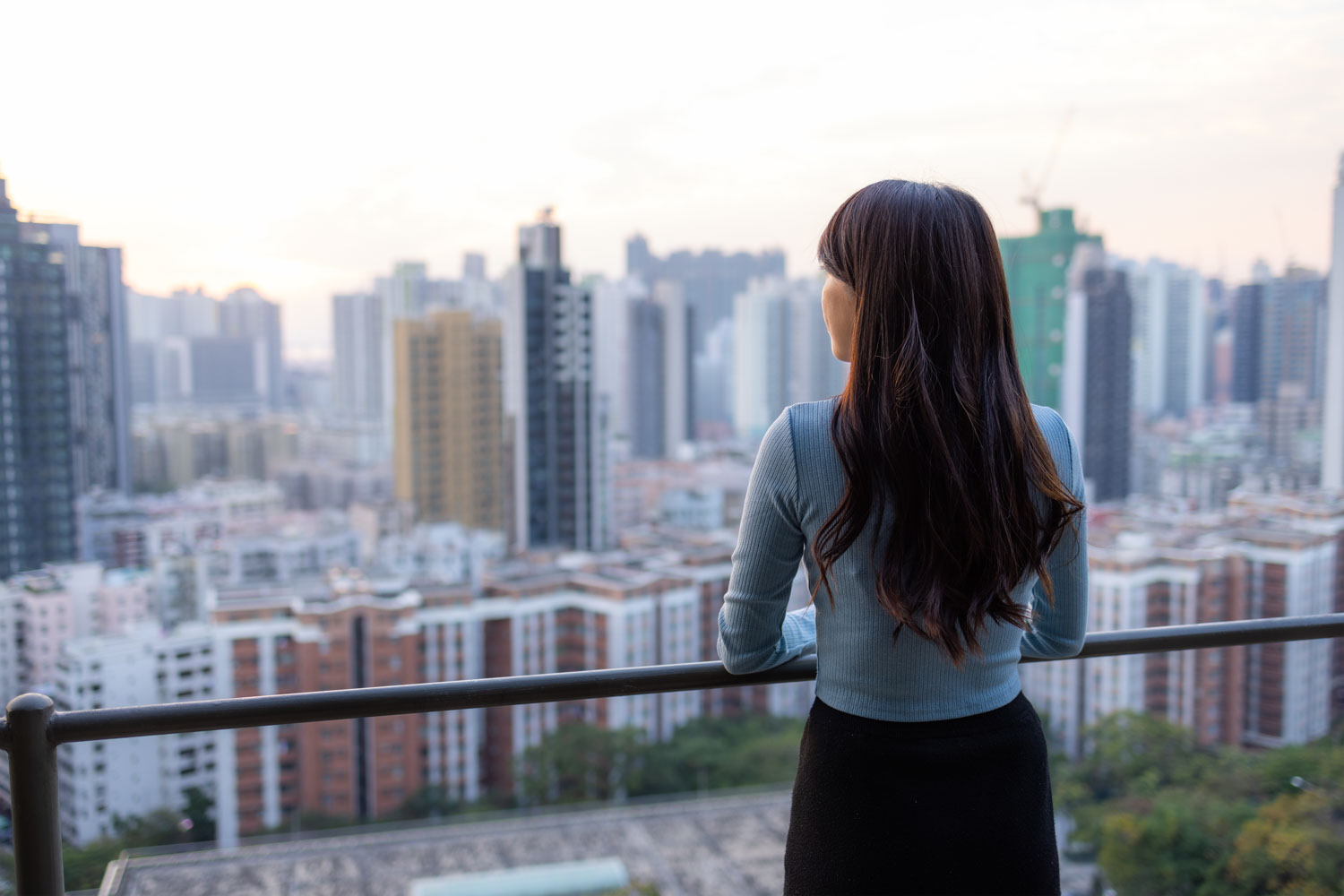
Home is a place where one resides either as a member of the family or the household. But it is more than just a roof over one’s head: it is a place where one can have a private moment away from the outside world, a place where you feel safe.

The standard employment contract for MDWs in Hong Kong states that employers should provide MDWs with suitable accommodation with a reasonable amount of privacy; makeshift beds in an open corridor, with little-to-no segregation from the rest of the household, are not considered suitable living conditions according to the Hong Kong Labour Department website.
Nonetheless, there have been published reports of MDWs being made to sleep in kitchen cupboards, bathroom floors, makeshift sheds on the balcony, behind bookcases, and many other inappropriate places. On top of this, some workers are routinely expected to work 16 to 18 hours per day and are not given the legally required 24-hour rest period during their days off, with employers allowing them to leave the house only during certain times or enforcing curfews.
It is perhaps no surprise then that these little pockets of precious real estate – be it sat on a cardboard box, a picnic mat, or in a camping tent – are cherished as a temporary home. Surrounded by people they love and hold dear, people they consider their family away from their home countries, MDWs find a way to cope with the stresses and loneliness of daily life.
They assert their presence in a society that often overlooks their contributions and sacrifices. By carving a modicum of an abode for themselves, they reclaim a huge piece of their privacy and feel an immense sense of relaxation and relief that most do not feel in their employer’s homes.
It is a paradox that somewhere as public as a busy street or walkway serves as a personal private sanctuary for these workers, yet that is how everyone finds inner peace; we create it for ourselves and carry it with us wherever we may be.




Leave a Reply