

Hong Kong’s population,according to the 2021 census, stands at 7,413,070. Of this number, 91.6% – or 6,793,502 – are ethnically Chinese. The next biggest ethnic group are Filipinos.
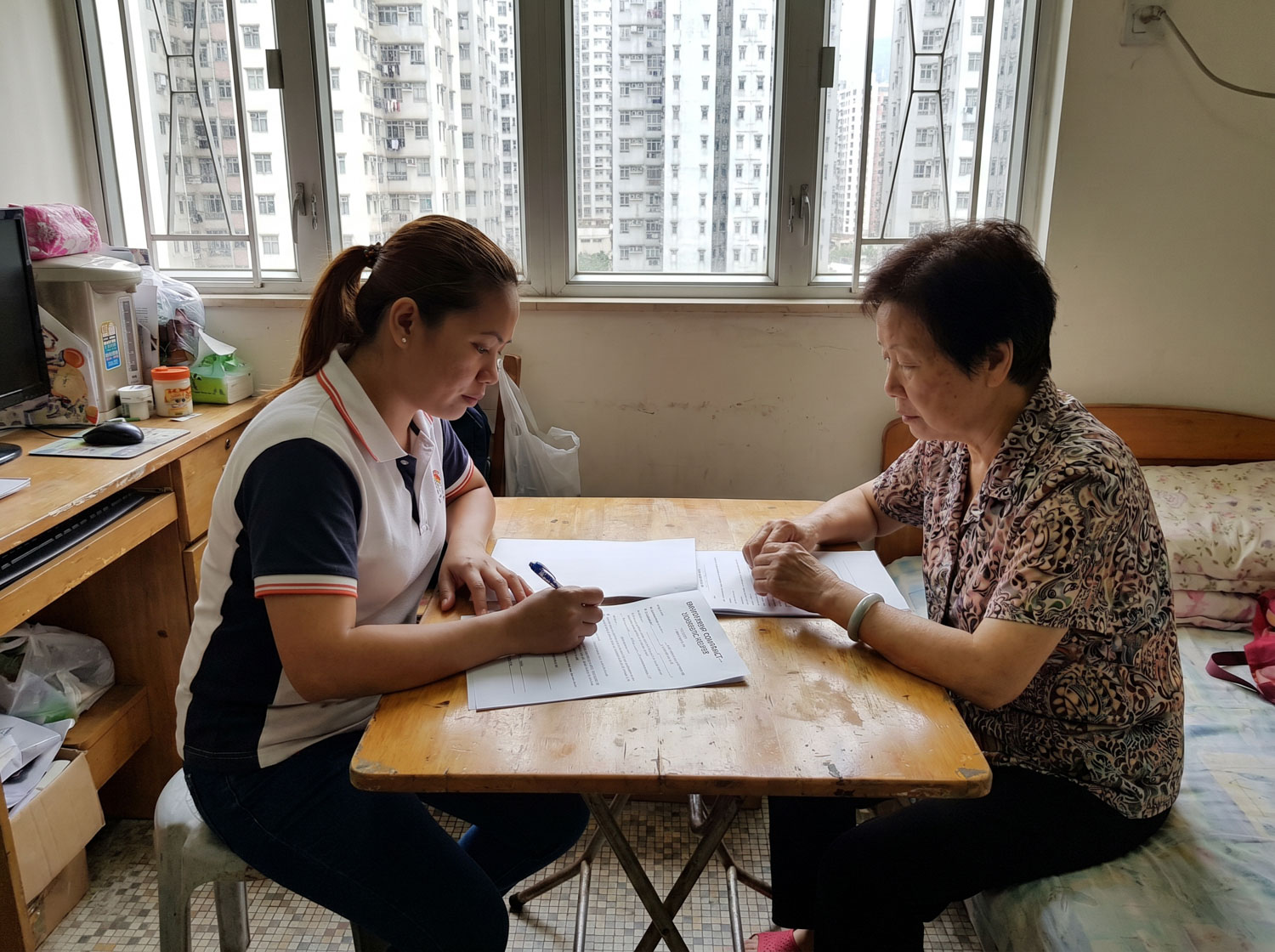
Numbering 201,291, Filipinos represent 2.7% of the population living, studying, and working in the city, with the majority of those employed as migrant domestic workers (MDWs). Since the early 1970s, Filipino workers have been looking after families and households in Hong Kong – and around the world – as a way of improving their own lives and the lives of their families back in the Philippines.
There is no doubt that MDWs have contributed a lot to Hong Kong’s economy. According to a 2019 study by local NGO Enrich, MDWs have contributed HK$98.9 billion to the city’s economy, or 3.6 % of GDP. Employing a MDW to assist with childcare and household duties has also allowed more women to join the local workforce and focus on their own careers.
There are also many Filipinos who call Hong Kong home. Born to immigrant parents working across all sectors of the community – musicians, engineers, pilots, flight attendants, bankers, business owners, social workers, MDWs, amongst many others – many of these second and third-generation children have spent their entire lives here, growing up and studying in local Hong Kong schools and eventually forging their own career paths in the city. Then there are the children of mixed Filipino heritage, many of which, even if they do not speak Filipino, still carry their Filipino roots with pride.
“I understand Filipino 100%, even if I do struggle to reply back in Filipino. When I speak to a kababayan, I make an effort to let them know that I am also Pinoy (colloquial term for a Filipino person) even if it is in Taglish (a portmanteau of Tagalog and English, an acceptable conversational style of speaking in informal settings),” beams Richard Fernie, a Hong Kong-born, British-Filipino and Co-Owner of Not 2 Sweet – an eclectic new bar in Peel Street, Central, featuring unique cocktails and a grungy interior featuring art pieces from Hong Kong-based Filipino artists.
“Our Mom, Vianee, has always told us about the importance of family. Although she didn’t specifically teach us how to speak Filipino growing up, my two younger brothers and I understand it well. We have also been immersed in the food and culture. We grew up being close to our Filipino cousins who were also born and raised in Hong Kong,” shares Richard.


Christine Vicera has grown up in Hong Kong since her family arrived here in the 1990s. She is a writer, researcher, filmmaker, and Co-Founder and Director of be/longing – a community arts-for-education lab that harnesses the transformative power of storytelling and the creative arts to cultivate cultures of inclusion in Hong Kong.
Christine shares how her parents helped both her and her brother connect with their Filipino heritage: “My parents, who are first-generation immigrants, always made it a point to remind my brother and I of our roots. What we know about Filipino culture and what it means to be Filipino would often be passed down to us through the stories they shared at the dinner table. There’s something about eating together that makes storytelling so easy.”


Language, in connection with storytelling, is indeed one of the important pillars of culture. It is the way by which people communicate with one another, build relationships, and create a sense of community.
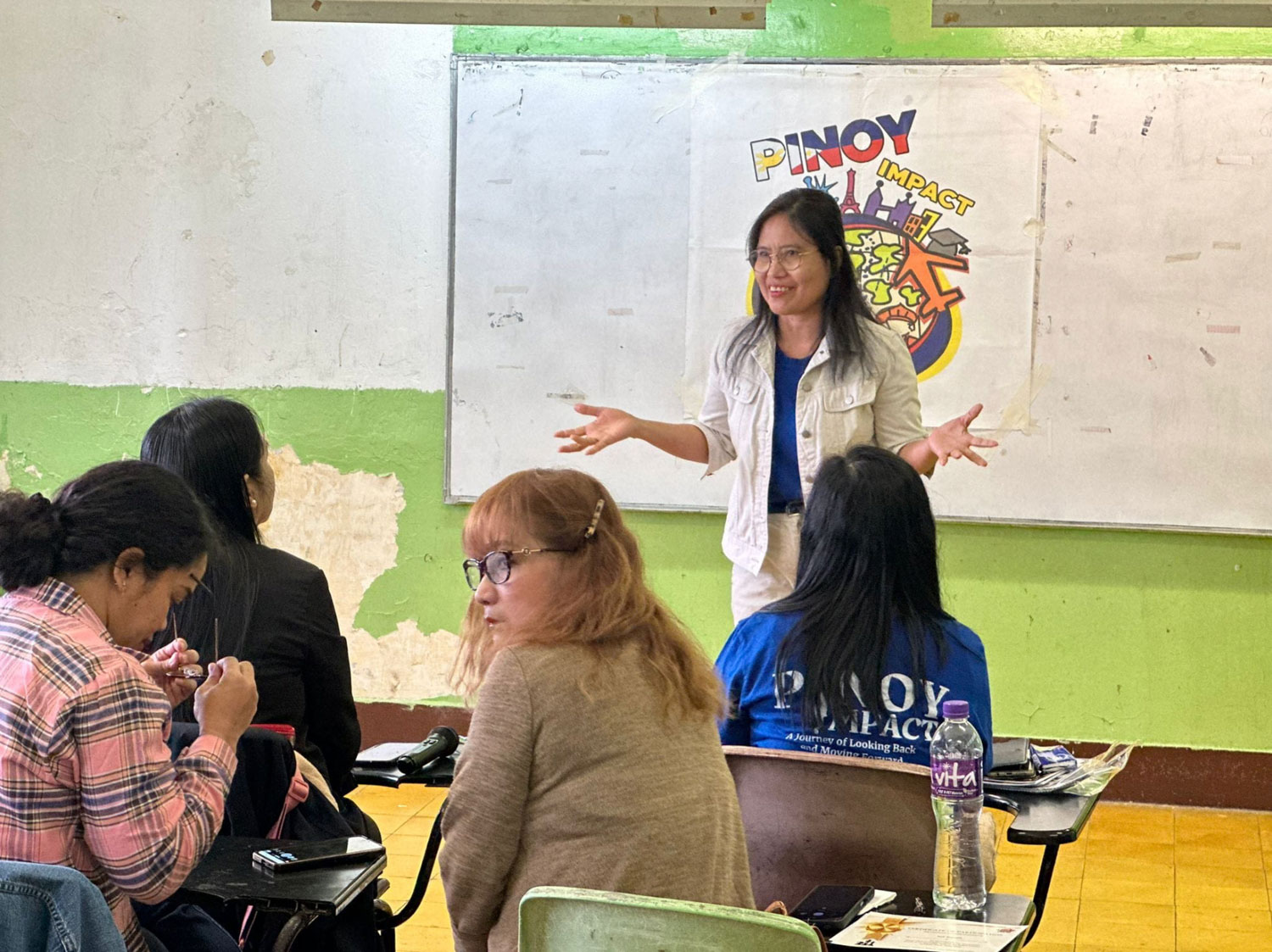
“I often encourage parents to teach the Filipino language to their children so that they will learn to value their culture and heritage, which contributes to a positive self-concept,” says Catherine Tating Marsden, Founder of Teatro Filipino – a performing arts group that encourages young Filipinos to express themselves through dance, song, and acting – and now Performing Arts Workshop Program Instructor of Silid Kultura (Room of Culture), a cultural immersion-through-arts programme for Filipino children in coordination with the Head of Cultural Affairs of the Philippine Consulate General Vice Consul Allan Revote.
“Second and third-generation immigrants often struggle with a feeling of cultural disconnection amidst a diversified and multi-cultural environment. Speaking Filipino can help them feel closer to people with similar roots and find a sense of belonging to a community; it will bring about cultural awareness. Being culturally aware can help them recognise and appreciate other people’s beliefs, customs, and values, which will help break down cultural barriers. They can relate better to people with cultural differences as they begin to understand themselves better,” says Catherine.
I understand Filipino 100%, even if I do struggle to reply back in Filipino. When I speak to a kababayan, I make an effort to let them know that I am also Pinoy even if it is in Taglish
– Richard Fernie, owner of Not 2 Sweet bar in Central
“The children who attended the Silid Kultura have demonstrated their appreciation of learning the Filipino language and our culture through songs and dances. I have seen their sense of pride being a Filipino after they learned to speak a few Filipino words and spoke the language on stage,” she shares with a smile.
The Filipino diaspora across the globe is a testament to the resilience and adaptability of the culture. According to a 2022 government report, there is an estimated total of 10,793,839 Filipinos living outside of the Philippines, more than the population of Hong Kong, Macau, and Zhuhai combined. This dispersion means that in almost every country in the world, there is access to Filipino culture.
“Wherever I travel and meet a fellow Pinoy, you can really feel the camaraderie. It’s like an unspoken rule of ‘Ay, Filipino ka pala!’ (Oh, you are Filipino!), [that’s] immediate bonding right there,” says Richard, as his business partner, Leo, interrupts the interview to ask for help reading a note written in Chinese that a local worker has handed to them. Richard reads the note and explains to the worker – in fluent Cantonese – that they have the wrong address. While the whole interaction lasts only two minutes, it acutely highlights the cross-pollination of cultures and the importance of embracing them.
Music is also a core part of the Filipino psyche. It is what unites us in everything –political upheavals (e.g. Magkaisa – a song associated with the EDSA revolution), folk songs, kundiman (a classic form of Filipino love songs), Original Pilipino Music (known locally as OPM), and many other genres.
“The reason why I can understand Tagalog and Bisaya well is because of the Filipino community I grew up with at Church, and through music,” shares Christine. “In my teenage years, I rediscovered my love for OPM classics, which my parents played a lot of growing up. I then took it upon myself to actively find Filipino bands and singers to listen to as this helped me fall in love with the depth of the language. Eventually, I was given the chance to perform on a small stage at [HK music festival] Clockenflap in 2018, where I sang IV of Spades’ “Mundo” – the same year the band themselves also played at the festival. This was an important experience that allowed me to share the music that I hold so dearly to me. Music was, for me, a safe space through which I could learn more about my culture.”
There is no doubt that young Filipinos growing up in Hong Kong gravitate towards the language, food, music, and culture of their parent/parents. So how can parents help their children better understand and get the right exposure to the culture?


“Having a Filipino role model will help them to have a sense of pride. Learning about our National Hero, José Rizal, and other great women and men from the past can help. Parents can also share stories about their childhood memories, family traditions, practices and values like pagmamano (showing respect to elders), our strong, resilient character, and other positive Filipino traits and skills,” says Catherine.
She continues, “Another way is to get them involved in cultural activities. Hands-on experience will always plant in their heart a deep love for their culture and their country, the Philippines.”
Even in mixed Filipino families, the children will always be in contact with their Filipino heritage. “I love hanging out with our mama and papa – what I call my grandma and grandad. They tell us stories of how they grew up in the Philippines. One of my favourite stories is how my mom and dad met – my dad is British, and my mom is Filipino – how they both travelled so far from where they grew up to find work and ended up meeting in China. If I do have children in the future, for sure they will learn about their Filipino roots. With how close our family is, there is no escaping it!” laughs Richard.
While growing up as a Filipino abroad has its challenges, there are also many benefits; multiculturalism, being bi- or trilingual, adaptability, education and work advancements, and independence. Hong Kong has been open to Filipinos for many decades and the children of the original immigrants are now children of Hong Kong as well. There will always be a sense of pride in being a child of these cultures. “Growing up in a city like Hong Kong isn’t easy. But when I look around me, and see how much the people from our communities have thrived in spite of it all, makes me so proud,” ends Christine.
Hong Kong is my home. I was born in Causeway Bay and grew up in Aberdeen. I have lived here all my life – more than 40 years. There are times when I do not feel entirely welcome, where the colour of my skin and facial features elicit situations of discrimination and microaggressions. These can really hurt. But oftentimes, my community, culture, and heritage make me proud to be a Filipino, while my upbringing, identity, and inspiration to help my home, make me proud to be a Hong Konger.




Leave a Reply