

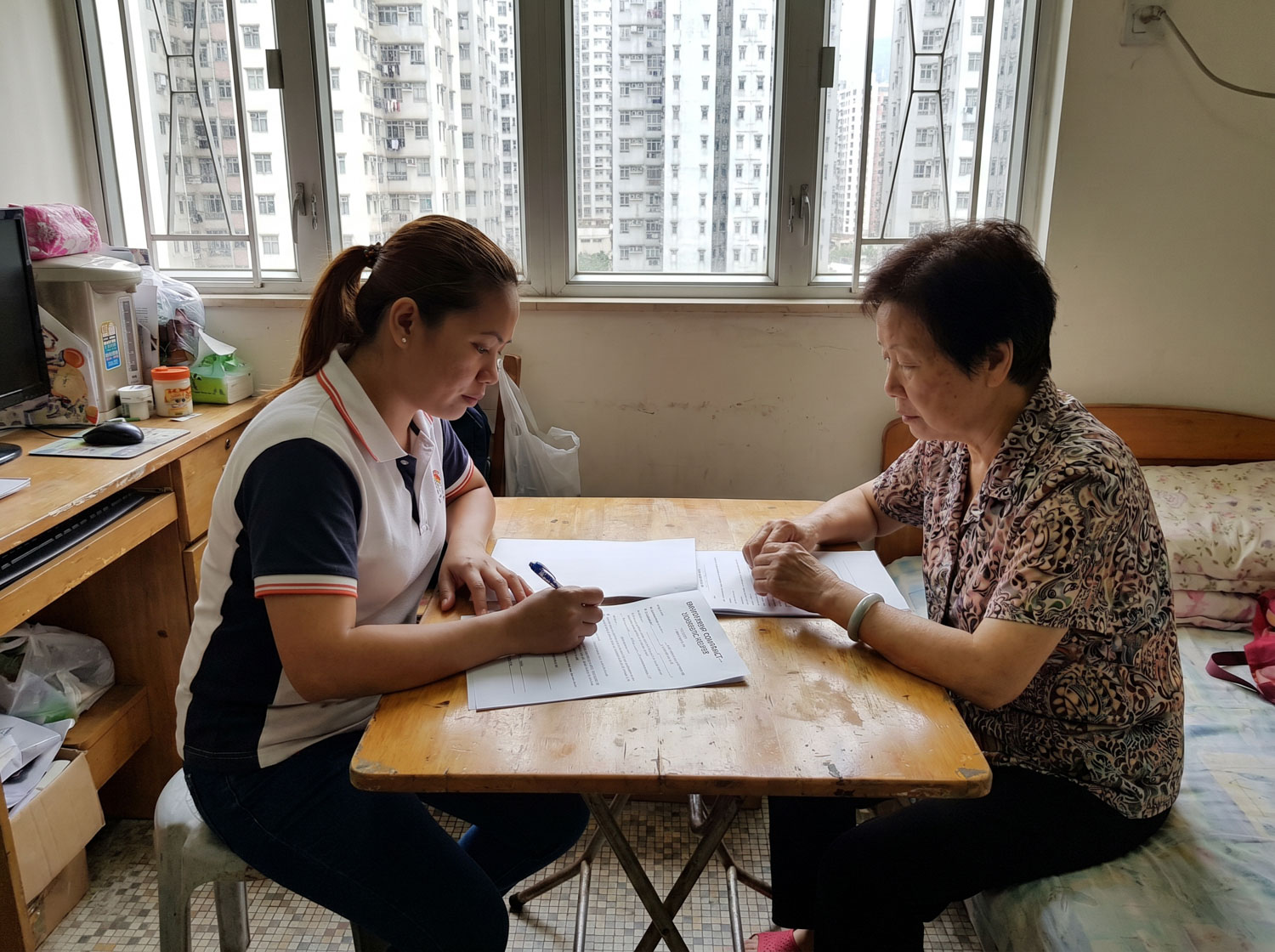
According to the International Labour Organization, around 67 million people are classified as domestic workers globally. As the terms of their employment can be vague and informal, as a workforce they can often be one of the most vulnerable to exploitation.
According to statistics from 2014, one in every eight households in Hong Kong employ a migrant domestic worker (MDW). Despite making up about 10% of the working population, most are not granted the same liberties as local workers.
A study commissioned by Experian, jointly presented alongside Enrich HK – a local NGO that advocates financial literacy for MDWs – found that domestic workers contribute approximately HK$98.9 billion to Hong Kong’s economy, equivalent to 3.6% of local GDP. Yet in many respects, they continue to be excluded from participating in the local economy; only around 18% have Hong Kong bank accounts and they are not considered eligible for government initiatives such as the recent consumption voucher scheme. Likewise, as many as 85% of domestic workers are saddled with high and often unsustainable levels of debt.
It is common for MDWs to face excessively long working hours, with many not given their mandatory 24-hour rest period every 7 days (as stated under Hong Kong labour laws). This in turn increases the risk of mental and physical health issues, which often go untreated due to heavy workloads and the demands of the job.
Living arrangements for MDWs are also an ongoing cause for concern. According to a 2017 study by Mission for Migrant Workers, one in fifty domestic workers are not provided with adequate living quarters; examples were highlighted where workers were expected to sleep in areas such as toilets, storage rooms, basements, balconies, roofs, closets, or sub-divided common spaces. More alarmingly, 14% were found to have no ready access to a toilet at all, while 33% were not provided with any fan or air conditioner during the hot summer months.
The number of domestic workers in the city is expected to reach 600,000 by 2047 (an increase of more than 50% based on today’s figure), to cope with the rapidly ageing population. While Hong Kong is considered a benchmark for MDW wages and workers’ rights in the region, oversight and implementation of local laws can nonetheless present challenges.
Despite all these issues, however, for many domestic workers who have lived most of their adult lives in Hong Kong, they continue to be full of hope and motivation for the future.
In many cases hailing from less-fortunate backgrounds in their home countries, MDWs are often required to make significant sacrifices, spending months and years away from their own children and families in order to provide a better life for their loved ones.
But their resilience is admirable; despite tolerating many hardships, they still find time to care for their own well-being and the well-being of others. Over the years, hundreds of migrant community groups have been founded to offer support and knowledge to their peers. From dancing to cooking, from martial arts to writing prose, these groups serve as an outlet and a lifeline for a lot of MDWs.
Each and every one of them has a story to tell. They are not only domestic workers, but they are also wives, mothers, daughters, and sons, from a kaleidoscope of cultures and educational backgrounds, who love and live their lives the best they can. They deserve respect and dignity, like all workers do. Domestic work is real work.
Three migrant domestic workers from different walks of life, Suci, Jerick and Mayette share their inspirational stories of working in Hong Kong and the impact it has had on their lives

Suci Resmiyati (Indonesia)
Suci arrived in Hong Kong in November 2008. The first family who employed her did not give her enough rest and she found herself on call 24/7. “I was often tired and did not have a lot of time to myself,” Suci tells us during our previous visit to TCK Learning Centre (TCKLC) – an all-volunteer educational charity founded by Indonesian domestic workers – where she is now an instructor. Tearing up while describing her previous hardships, she shares that she has since found a new employer she is very happy with, who treats her with respect and values the work that she does for them.
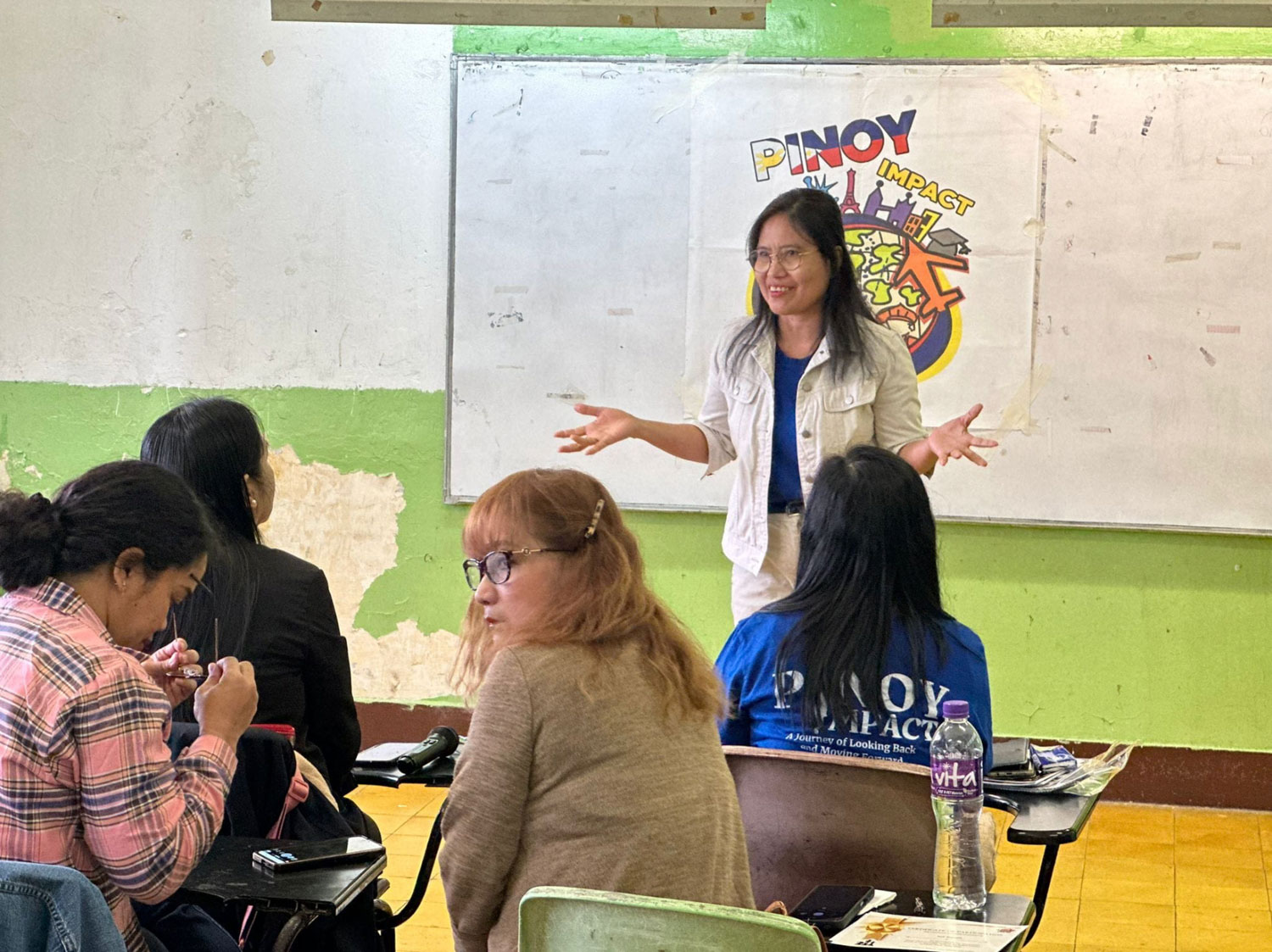
For almost four years now, every Sunday on her day off, Suci has volunteered her time and skills as a Basic English and Basic Computer Literacy instructor for TCKLC. Located in Causeway Bay and mainly catering to Indonesian students, their humble space buzzes with activity on Sundays, as MDWs from across Hong Kong get together to learn, laugh, and socialise.
But the learning never stops for Suci as she has dreams of becoming a painter: “I would really love to pursue painting and drawing. I recently joined the community group Arts in Me (AIM), and I really enjoyed creating art,” she says.
“I love learning; I will not stop learning and I encourage others to do the same. The more we learn, the more we gain confidence and grow as a person.” She adds, “It is also good that we can share our knowledge with others; that motivates me to learn even more.”


Jerick Mora (Philippines)
As a registered nurse back in the Philippines, becoming a domestic worker in Hong Kong was not the career path Jerick originally had planned for himself. However, nursing is a crowded profession in the Philippines, and having a nursing degree does not automatically guarantee employment.
Jerick’s now-retired mom had worked as an MDW in Hong Kong since 1989, allowing her to put Jerick and his sibling through school. Once they earned their degrees and started making their own money, they began visiting her here in Hong Kong. “We would visit Mama as often as we could, or whenever there was a sale on plane tickets. Having also seen Mama at her work, we have grown up knowing how much she has worked hard for us,” says Jerick.
“Some children grow up with their moms working overseas without knowing the realities of what it means to be domestic worker. They keep asking for expensive gadgets or for more money,” he shares. “We tried not to ask Mama for anything that was not important. There was even one Christmas that she asked us what we wanted, but my sibling and I had saved up enough to get what we wanted ourselves.”
As a male domestic worker, Jerick is very much in the minority in Hong Kong; of the over 400,000 MDWs working in the city, 98.5% of them are female. It is a female-dominated workforce and the need for male MDWs is often limited to gardening, driving, and heavier household chores.
After a short stint working for a purchasing company in Saudi Arabia, Jerick was offered a job in Hong Kong as a domestic worker, caring for his employer who was pregnant with twins. Being knowledgeable in first aid and triage, he was a valuable employee; when the twins arrived, the parents could rest assured in the knowledge that they had a qualified medical professional looking after them.
Although Jerick’s first employer has since left Hong Kong, before doing so they made sure he found a new employer who would appreciate his skills. He is currently happily employed as a domestic worker looking after a young family and their dog.
Jerick has a busy social life and his days off are often packed with meet ups, singing competitions, event hosting, pageant judging, and many other activities. He has won several singing competitions and has even modelled for local companies. He spends his personal time away from his day job enriching his life experience here in Hong Kong, making memories with the good friends he has made along the way.


Mayette Cortez Telmo (Philippines)
“Dumating ako ng Hong Kong noong September 2005, mga 18 years na pala!” [I arrived in Hong Kong in September 2005, I’ve already been here for 18 years!] exclaims Mayette with glee. “Dito na ako tinubuan ng ugat.” [This is where I have grown my roots.]
About 1% of Hong Kong MDWs are drivers, and 90% of them are men. Before becoming a fully licensed driver, Mayette started as a domestic worker. She worked hard every single day to provide for her 5 children back in the Philippines, but still found it hard to make ends meet.
When she finished her employment contract, she was able to get an interview with her current employer, who was pregnant at the time. “Tinanong ko sya kung plano ba nilang bumili ng car in the future, sabi naman nila na oo. Kaya tinanong ko sila kung payag ba sila na paaralin ako ng driving, kahit i-salary deduction nalang nila, umoo naman sila,” [I asked them if they were planning on getting a car in the future, they said yes. So, I asked them if they would permit me to take driving lessons, even if they had to deduct the cost from my salary, and they agreed] Mayette says.
She has been driving in Hong Kong ever since, and the additional income she has been able to earn meant she was able to make sure her children finished school. They are all now professionals and some of them have families of their own.
In 2014, Mayette joined a community group comprised of migrant drivers called Radiant Organization of Amiable Drivers and Friends (ROADHK & Friends). She is now their President, overseeing their social media alongside her fellow administrators and officers. Their main purpose is to help MDWs who are, or would like to be, drivers here in Hong Kong. They organise “learn to drive” seminars that help answer all the questions domestic workers might have about becoming drivers, giving them the opportunity to learn and earn more in the process.




Leave a Reply